

Platform
Platform Overview
The Shelftrak web platform holds every store you trade in: global comparisons, store-by-store drill-downs, every audited fixture photograph — and your own Perfect Store scorecards built on top.
Behind it, VISTA — Shelftrak's computer vision — reads every shelf photo to SKU level in seconds, and our retail specialists verify every result before you see it: 100% verified data accuracy on the numbers you take into a retailer negotiation.
From photos of shelves to data you can act on.
Photographs taken of the shelf using the Shelftrak app are instantly processed by our AI pipeline. Every result is then checked by one of our retail specialists before it reaches your dashboard.
STAGE 1
Image preprocessing
Every shelf photo is resized, normalised and enhanced so the AI reads labels, packaging and shelf tags with maximum clarity.
STAGE 2
Recognition & classification
VISTA matches every product against a proprietary database of retail SKUs — catching even subtle label and packaging differences.
STAGE 3
Automated compliance checks
The shelf is compared to your planogram and standards: pricing, promotional display accuracy, stock gaps, positioning.
STAGE 4
Human verification
Trained retail specialists review the output before it reaches you. The step fully automated competitors skip — and the reason our data is 100% reliable.
We put a retail expert between the machine and your dashboard, so you can trust the numbers.
Zero-shot AI alone gets you speed but with blind spots. Trained models alone get you accuracy that decays every time a pack design changes. Shelftrak layers both — then we have every result checked by our retail specialists.
The result: 100% verified data accuracy.
Zero-shot AI
Instant coverage of any product, any market — no training lag
Custom-trained models
Precision on your portfolio and your competitors
Human verification
Every result checked by retail specialists
= 100%
verified data accuracy
Dashboards & Reports
One login, three areas — Global View for the whole estate, Store View for any fixture in it, Custom Dashboards for your score — with bespoke analysis beyond the platform.
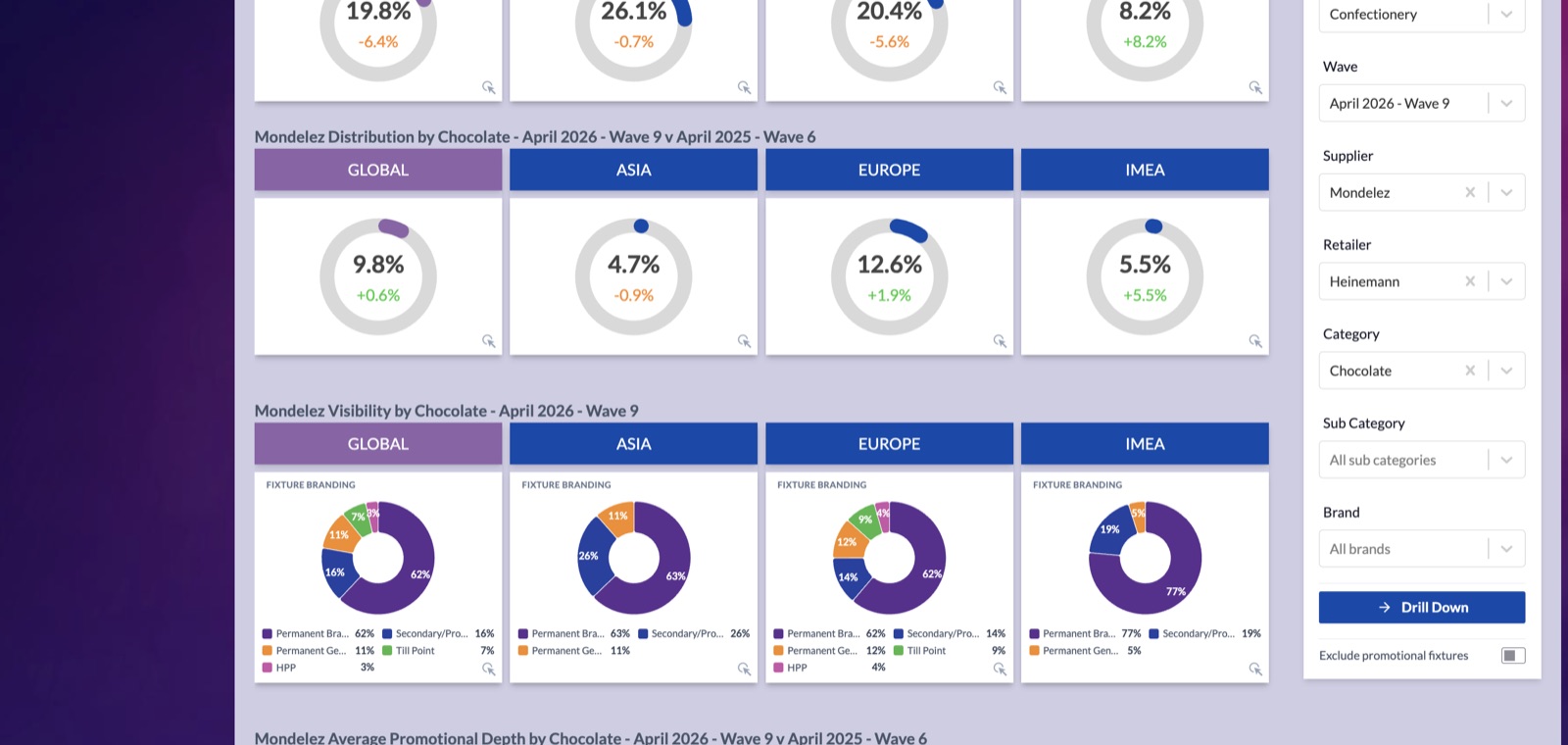
Global View
Share of space, distribution and visibility, region by region — any wave against any wave.
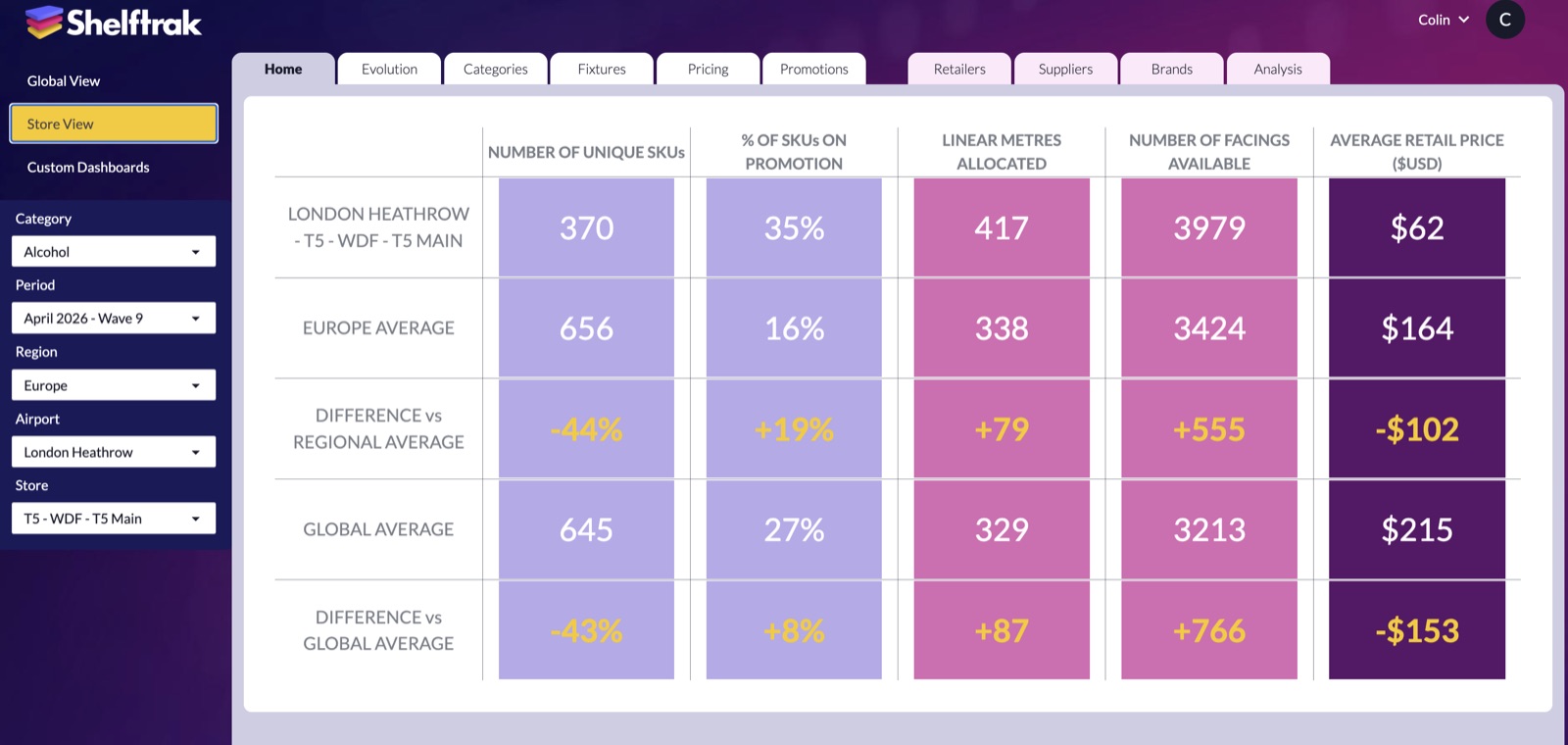
Store View
Any store down to a single fixture, with every audited photograph one click away.
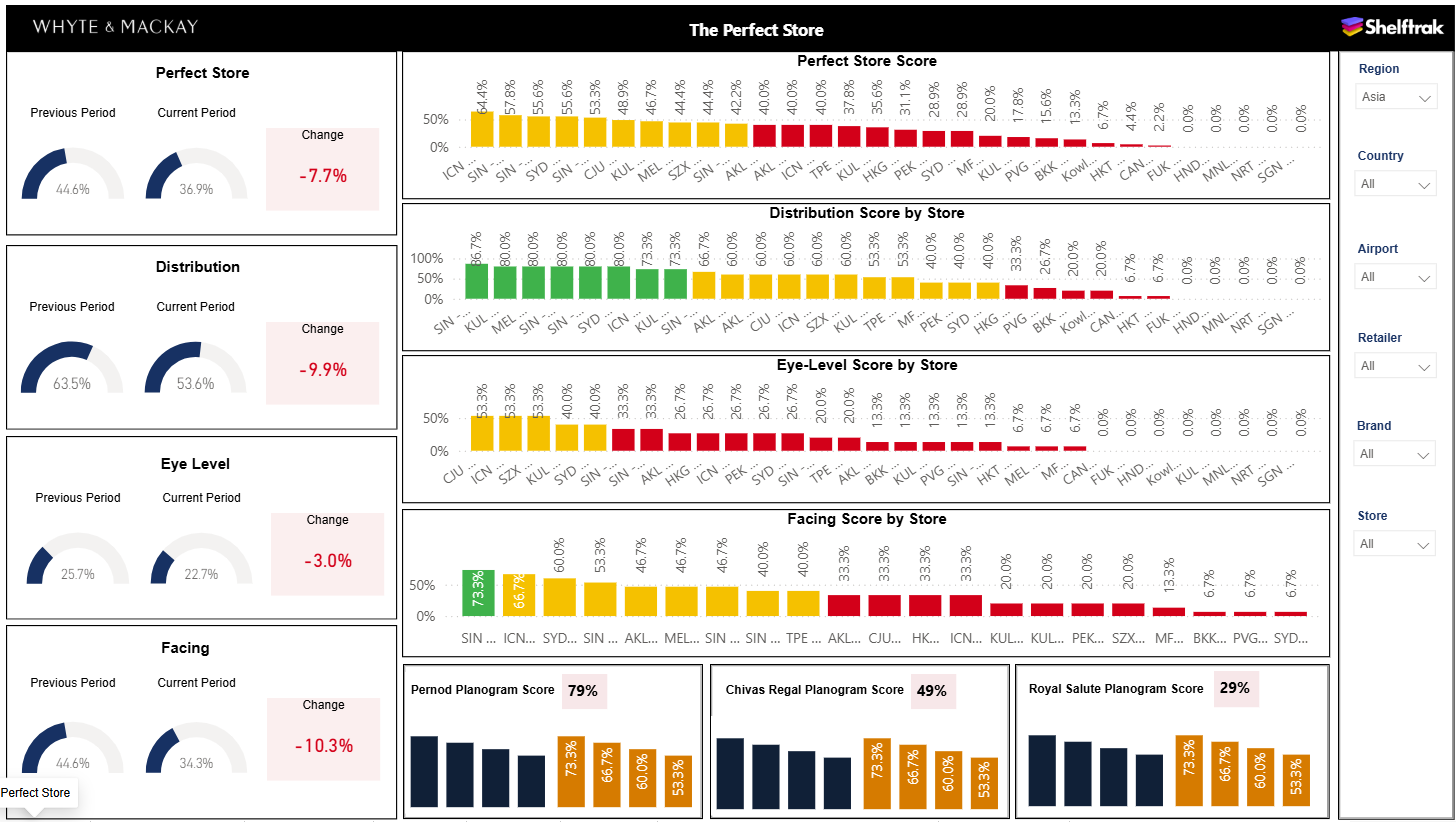
Custom Dashboards
Your Perfect Store score, MSL distribution and price ladders, configured around your portfolio.
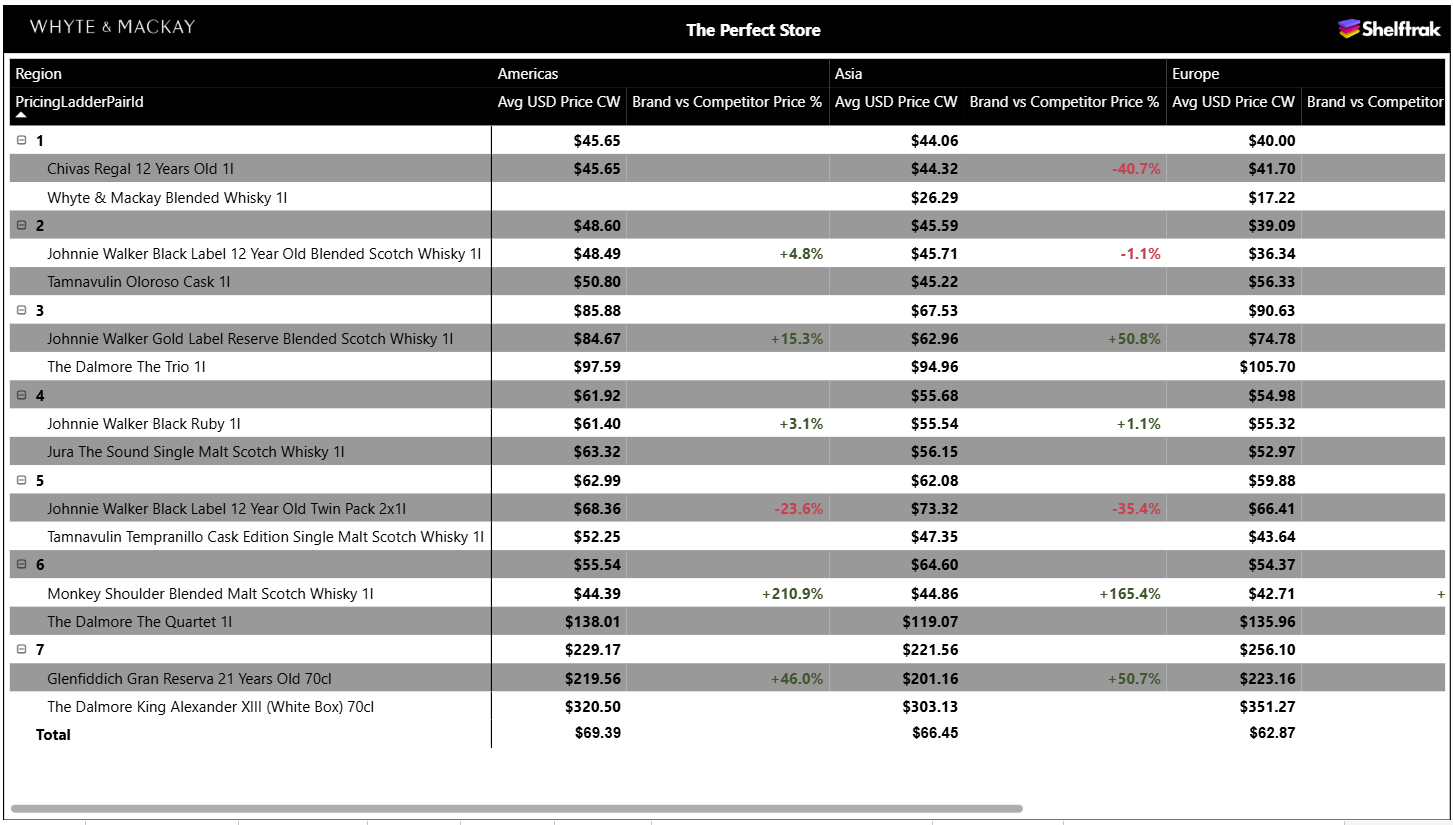
Bespoke analysis
Airport, market and category reports built around your priorities — each with a number to act on.
Case study
Tequila Patrón, European Travel Retail
A Shelftrak audit across eleven European airports found the exact stores where Patrón was losing its share of the Tequila category — down to one facing on a bottom shelf in Frankfurt.
Read the case studyTechnology — FAQ
How does AI shelf image recognition work?
Shelftrak’s pipeline runs four stages. Each photo is preprocessed — resized, normalised and enhanced — so labels and shelf tags read clearly. VISTA then matches every product against a proprietary database of retail SKUs, distinguishing even similar labels and pack variants. Automated checks compare the shelf to the planogram and agreed standards. Finally, trained retail specialists verify the output before it is reported.
How accurate is Shelftrak’s image recognition?
Shelftrak reports 100% verified data accuracy, where “verified” is the operative word: fully automated providers typically publish recognition rates in the 90s and pass the residual errors through to the report. Shelftrak layers zero-shot AI (immediate coverage of any product) with custom-trained models (precision on a specific portfolio), then has retail specialists check every result before it is reported.
Do AI shelf audits still need human verification?
Shelftrak’s position is yes. Zero-shot AI alone is fast but has blind spots; trained models alone are precise but degrade whenever packaging changes. A human verification layer between the machine and the dashboard catches both failure modes, which matters most when the data is used commercially — challenging a retailer on space, or a field team on compliance, requires numbers that hold up.
Does image recognition work with poor-quality photos?
Up to a point — accuracy in any image recognition system depends on photo quality. Shelftrak manages this at both ends: the app guides capture in store, and the preprocessing stage resizes, normalises and enhances each image before recognition. Anything the AI can’t resolve confidently is caught at the human verification stage rather than passed through as a guess.
Is image recognition better than manual shelf audits?
For measurement, yes: a photographed audit is faster (seconds per fixture), objective (no judgement calls on facings or positioning), and evidenced (the photo is attached to the score). Manual audits still have a role where judgement or interaction is required, but for repeatable SKU-level measurement across many stores, recognition-based audits are faster and more consistent. In Shelftrak’s model the store visit stays human — one photo per fixture — while the measurement is done by VISTA and verified by retail specialists centrally.
Price & promotion tracking — FAQ
How do brands track prices in physical stores?
Most price-tracking tools cover e-commerce; in-store prices still have to be read off the shelf edge. Shelftrak does this from the same photograph that audits the fixture: VISTA extracts shelf-edge prices at SKU level, giving brands actual in-store prices — not list prices — across every audited store, as price distributions by market and price ladders across the competitive set.
Can Shelftrak monitor competitor prices and promotions?
Yes. Because VISTA reads the whole fixture rather than one brand’s products, every audit captures the competitive set alongside your own SKUs: competitor prices and price ladders, promotional depth and mechanics, and share of space over time — which brands are gaining facings and which are losing them.
What’s the difference between MAP monitoring and in-store price auditing?
MAP (minimum advertised price) monitoring polices the prices retailers advertise, mostly online, against a brand’s pricing policy. In-store price auditing measures what is actually on the shelf edge — which is where pricing errors, missed promotional prices and unauthorised discounting show up physically. They’re complementary. Shelftrak covers the in-store half: VISTA reads shelf-edge prices at SKU level from fixture photographs, across both a brand’s own products and its competitors’.
What is promotional compliance, and why do promotions fail in store?
Promotional compliance checks that a promotion actually ran as agreed: display built, stock in place, price changed, POS materials up. Promotions usually fail quietly — the display never goes up, or the price never changes — and POS data alone can’t distinguish a promotion that failed from one that never happened. Shelftrak verifies promotional execution store by store in the same wave the campaign launches, while there is still time to correct it.
How do you measure trade promotion ROI at store level?
By joining two data sets: whether the promotion actually executed in each store (compliance), and what sales did in those stores. Without the compliance half, under-performing promotions are impossible to diagnose — the mechanic might be weak, or it might simply never have been set up. Shelftrak supplies the execution evidence per store, so the sales analysis compares like with like.
More questions — see the full FAQ →
Lorem ipsum dolor sit amet, minim molestie argumentum est at torquatos.
Apeirian detraxit pri eu. No solum accusam has. Ius ne harum mundi clita, eu pro tation audiam.