

Single Malt must win shoppers, not just shelf space
Shelftrak's latest data shows that despite physical expansion of Single Malt Scotch on travel retail shelves, this will not automatically translate into higher sales.

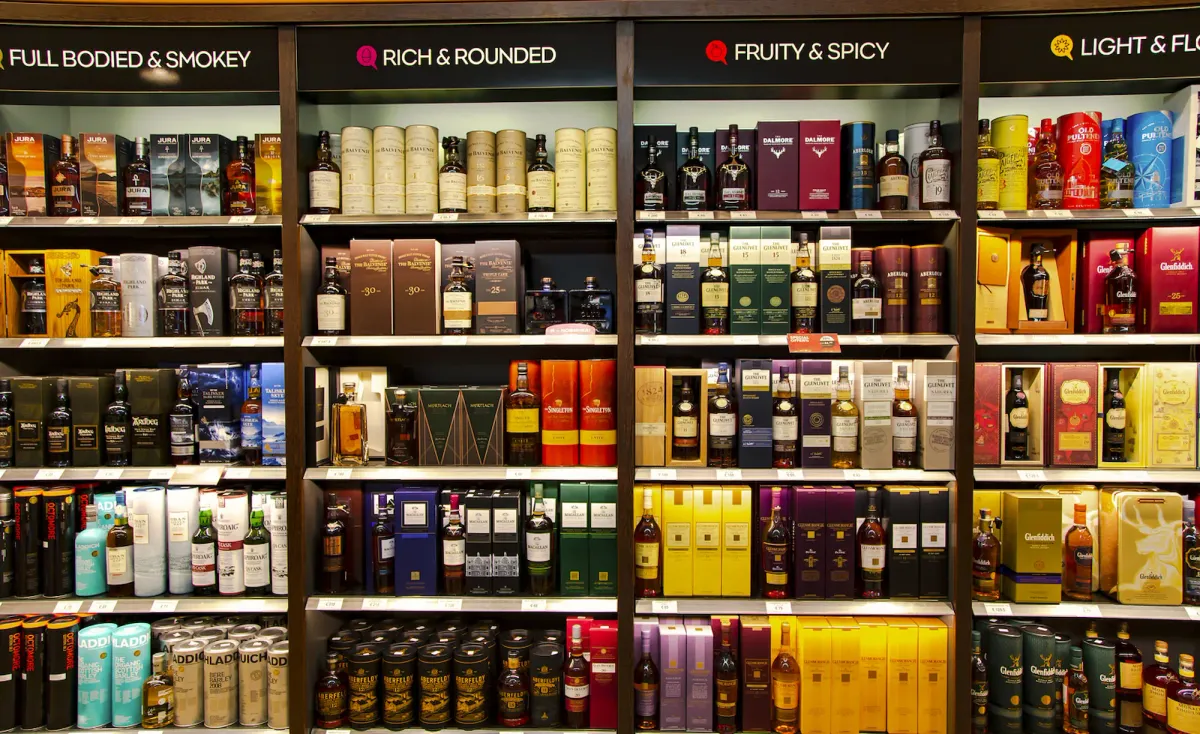
Shelftrak’s latest data highlights the physical expansion of Single Malt Scotch within travel retail shelves whilst also suggesting that the increase in space does not determine further growth. Instead, brands must adjust to the demands of today’s airport shopper.
Converting increased shelf space into increased sales
According to Shelftrak, space of Single Malt Scotch has increased during the last measured period. Single Malt is gaining greater visibility with a 12.6% growth in total facings from Q4 2025 to Q2 2026. Within the same period, Single Malt’s share of the total spirits shelf has increased by 1.1% from 14.4% to 15.5%.
However, Shelftrak’s data suggests that increased shelf space will not automatically translate into higher sales. Converting greater visibility into growth depends on improving shopper conversion. Although airport passenger numbers are rising, changing traveller behaviour means spending is not increasing at the same rate.
Lower spend per passenger partly reflects the emergence of new shopper profiles, with different budgets, shopping missions and levels of category knowledge. Brands must therefore rethink how they engage shoppers at the shelf, communicating value clearly while responding to growing demand for experience, relevant gifting and continued discovery.
Garry Stasiulevicuis, Shelftrak Managing Director, summarised this need for change within the category:
“The opportunity is not simply to put more Single Malt on more shelves. It is to make the segment easier to enter, easier to understand and more rewarding to explore. In a channel with more passengers but intense competition for every pound, dollar and euro, relevance at the shelf is what converts traffic into value.”
Potential to attract new travellers
Single Malt possesses all the requirements to suit developing shopper profiles and attract these new travellers. For instance, Single Malt is well placed to meet the new travellers’ desire for experience, not just products. This is because its provenance, craft, flavour and regionality can turn a purchase into a memory of the journey.
It is essential that these strengths are translated into simple shopper language, through guided tasting, flavour navigation, destination stories, personalisation and staff advocacy - attracting consumers by making the segment more rewarding than intimidating.
Exclusivity acts as another essential strength of Single Malt. Travel retail exclusives increased their share by 1.2 percentage points (to 41%) showcasing the channel’s ability to offer something unique. However, exclusivity alone is not a proposition. Again, clear communication with travellers is required. An obvious reason to buy is needed, such as a credible value equation or distinctive liquid, story, pack and gifting purpose.
Making value visible in a crowded price landscape
In addition to making Single Malt’s strengths clear to customers, it is also integral to make price architecture obvious. Currently, median shelf price is $99, with almost 60% of facing concentrated between $50 and $120. Products below $50 represent just 4.0% of spaces, whilst those at $500 or more account for 6.0%. Therefore, shoppers are unable to easily see a clear price ladder.
Pack architecture further complicates comparison. The 70cl format saw a 14% growth and now accounts for 60% of listings, compared with 3.0% growth for 1L. Yet the median price is $125 for 70cl versus $75 for 1L. Premiums may be justified by liquid, age or rarity, but brands must explain what shoppers gain as price rises. Without a clear good-better-best ladder, more choice can increase hesitation rather than conversion.
Promotional activity is still heavily price-led. Straight percentage discounts account for almost 40% of recorded activity, while gift-with-purchase represents less than 1%. Discount can drive a short-term response but over-reliance risks weakening premium credentials. Tastings, discovery formats, limited packaging and meaningful gifting offer ways to add value, recruit shoppers and make price feel justified.
Essentiality of curation within a fragmented market
Single Malt Scotch is seeing substantial but uneven growth. Asia now represents 41.5% of global Single Malt facings yet Europe acts as the fastest-growing region (+18.7%). Additionally, 111 brands are competing globally, creating a highly complex and competitive landscape. There is no significant domination by specific brands. The five largest brands together represent 35% of space and no brand owner holds more than 13% of facings.
Whilst this diversity creates opportunity, it also creates risk of duplication, clutter and weak visibility. It is important that each SKU has a clear role and has been chosen to best suit the traveller, instead of the same global range being replicated everywhere. Therefore, careful curation is required when selecting which Single Malts products should appear on the shelves at each airport. The decision behind such product assortment should reflect passenger profile, nationality, journey type, gifting behaviour and available spend.
About the research
Shelftrak's Single Malt Scotch Category Landscape compares Q4 2025) and Q2 2026. The latest physical shelf audit covers 49,417 SKU facings across 99 stores, 63 airports, 23 retailers, 111 brands, 37 countries and four regions. It analyses distribution, space, pricing, promotion, position, pack size, innovation and travel retail exclusives. No sales data is used.
Shelftrak Inside Trak Newsletter
Retail execution trends, analysis and data-led intelligence delivered straight to your in-box
Get the latest news and commentary on pricing, compliance, shelf visibility, and execution trends driving category and channel growth worldwide.
· Zero spam · Unsubscribe at any time
Related Reading
9 September 2026
Travel RetailUnlock the growth already on the shelf
Before chasing new growth concepts, travel retail brands can unlock millions in untapped revenue by fixing execution gaps on their existing shelves.
25 June 2025
Travel RetailGin in Travel Retail is Dead. Long Live Gin!
The era of unchecked gin growth is over. As the category matures, brands and retailers must adopt a disciplined, data-backed approach to shelf space.
18 March 2025
Travel RetailMastering Retail Execution in Travel Retail Environments
Travel retail brings unique execution challenges. Discover how brands ensure shelf compliance across duty free stores and capture every possible sale.